Product Overview
Purple Watercress (Nasturtium officinale 'Purple') -- edible pond plant
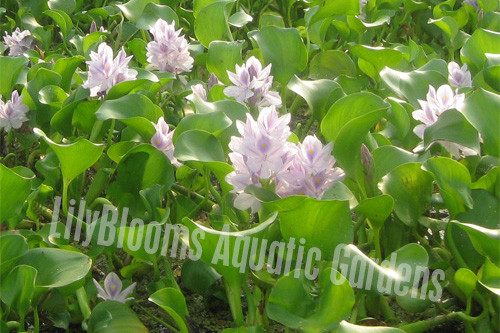
An exciting new strain of the common watercress, purple watercress has pronounced purple coloration. In cold weather common watercress can also show some purplish coloration, but the new purple selection is a much more intense purple. Purple watercress coloring will vary according to temperature, time of year, and amount of sun, and may fade in hot weather or deeper shade.
Watercress is known as being nutrient-dense, but did you know that it was listed as the most nutrient-dense food by both the Aggregate Nutrient Density Index and the CDC--watercress was the only food to receive a perfect score by both. A cruciferous vegetable related to broccoli (known for its cancer-fighting phytochemicals), watercress may also boast a higher essential mineral content than any other plant. Purple watercress should have an even better nutritional profile than regular watercress, because the purple coloration is sure to be an anthocyanin pigment such as is found in blueberries and purple potatoes.
Watercress tends to be a short, creeping/spreading plant, although in shade or when crowded it can get fairly tall by midsummer. It can be grown as a regular garden plant if it has constant moisture, but in hot conditions watercress does best in shade and the shallow running water of a streambed. Rather than planting it in water, it is best to plant along the edge of the streambed or pond and let it grow into the water. It generally keeps some live leaves and/or stems over the winter down to Zone 6 or 7; in the colder zones it may die completely and reseed itself in Spring (seeds need to germinate out of water, at the pond edge).
Because watercress likes cool weather, it grows well in Spring and acts as an excellent filtering plant, helping keep the pond clean. Spring is also the best time to harvest leaves and stems for salads, soups and stews (and sandwiches!)--once the clusters of small white flowers appear in Summer, leaves can have a bitter flavor. Plants may be trimmed back to encourage new growth and delay flowering; this keeps plants fresh looking and extends harvesting.
The regular green watercress is native to Eurasia and Asia but naturalized all over the US, to the point that most people consider it to be native.
We recommend buying watercress in Spring to reduce plant stress from shipping in hot weather, especially in warm summer climates. We may ship plants in Spring as rooted cuttings or in small pots, depending on availability; in Summer, we ship only in small pots as plants handle shipping in hot weather better in pots. Watercress leaves also tend to turn yellow in shipping during the warmer months, but quickly recover so long as they have a good stem and root system.
Hardiness Zone: 3-10
Planting Container: We recommend a 7.5" x 5" fabric pot to grow a regular sized plant, and a 10" x 6" fabric pot to grow a large sized plant. Click on any fabric pot link to read about why fabric pots work better than hard plastic pots!
Light Requirements: full sun to part shade, depending on climate; in warm climates, use shade and running water
Height: 6"-15" - Spread: 24"+
Water Depth: Moist soil to 3" moving water in streambed (Maximum water depth is for mature plants)
FERTILIZING: For best health and growth, we recommend fertilizing regularly (unless using the plants in a plant filtration system!). Use Pondtabbs 20 count, 60 count, or 300 count for fast release, or Aquascape 6 count or 12 count capsules for slow release (once a year) fertilizing. Aquascape is preferred for low maintenance, but Pondtabbs are useful in Spring when Aquascape is slow to start in low temperatures. Pondtabbs are also useful for a quick extra nutrient push for extra bloom, and for mid-summer fertilizing of a new plant (we don't recommend using slow release fertilizer in mid-summer or later in cold climates, as plants should run out of fertilizer at the end of the year to encourage dormancy in cold climates).
Plants are shipped bare root or in starter pots, and will require planting upon arrival. For in depth planting and care instructions visit our Planting and Care Instructions for Shallow Water and Bog Plants.
For information on using plants for pond filtration, please read our blog on this topic!