Product Overview
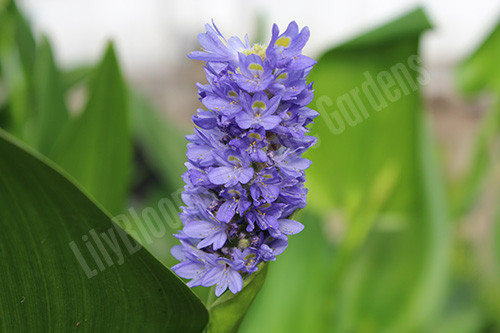
Royal Pickerel (Pontederia dilatata) -- shallow water pond plant
Royal pickerel is similar to the more commonly known pickerel rush (Pontederia cordata), but with significant differences. The blue bottlebrush flower spikes of royal pickerel are generally larger and fuller, the plant grows taller and more vertical, and the leaves are more elongated and spearhead shaped. Overall, royal pickerel makes a more striking specimen plant. Royal pickerel is not as winter hardy as common pickerel rush, being comfortable down to Zone 6 and possibly to Zone 5, especially if placed in a protected spot or below the ice. Usually blooms throughout the summer on new leaves.
Hardiness Zone: 6-11
Planting Container: We recommend a 10" x 6" fabric pot to grow a regular sized plant, or a 12.5" x 7" or 15" x 6" fabric pot to grow a specimen sized plant. Click on any fabric pot link to read about why fabric pots work better than hard plastic pots!
Light Requirements: full sun to part shade
Height: 48-72" - Spread: 12"+
Water Depth: Moist soil or water up to 10" deep (Maximum water depth is for mature bog plants)
FERTILIZING: For best health and growth, we recommend fertilizing regularly (unless using the plants in a plant filtration system!). Use Pondtabbs 20 count, 60 count, or 300 count for fast release, or Aquascape 6 count or 12 count capsules for slow release (once a year) fertilizing. Aquascape is preferred for low maintenance, but Pondtabbs are useful in Spring when Aquascape is slow to start in low temperatures. Pondtabbs are also useful for a quick extra nutrient push for extra bloom, and for mid-summer fertilizing of a new plant (we don't recommend using slow release fertilizer in mid-summer or later in cold climates, as plants should run out of fertilizer at the end of the year to encourage dormancy in cold climates).
Plants are shipped bare root or in starter pots, and will require planting upon arrival. For in depth planting and care instructions visit our Planting and Care Instructions for Shallow Water and Bog Plants.
For information on using plants for pond filtration, please read our blog on this topic!