
Planting and Care for Tropical Waterlilies ©
Planting should take place once the water is warmed up in Spring, usually several weeks after the last frost date. Water temperature should average at least 65 degrees, preferably warmer. Viviparous tropicals are slightly more tolerant of cooler conditions than nonviviparous tropicals. Night-blooming tropical waterlilies are even more sensitive to cool water, so should have a minimum average temperature of 70 degrees. Victoria night-blooming lilies need a minimum of 75 degrees.
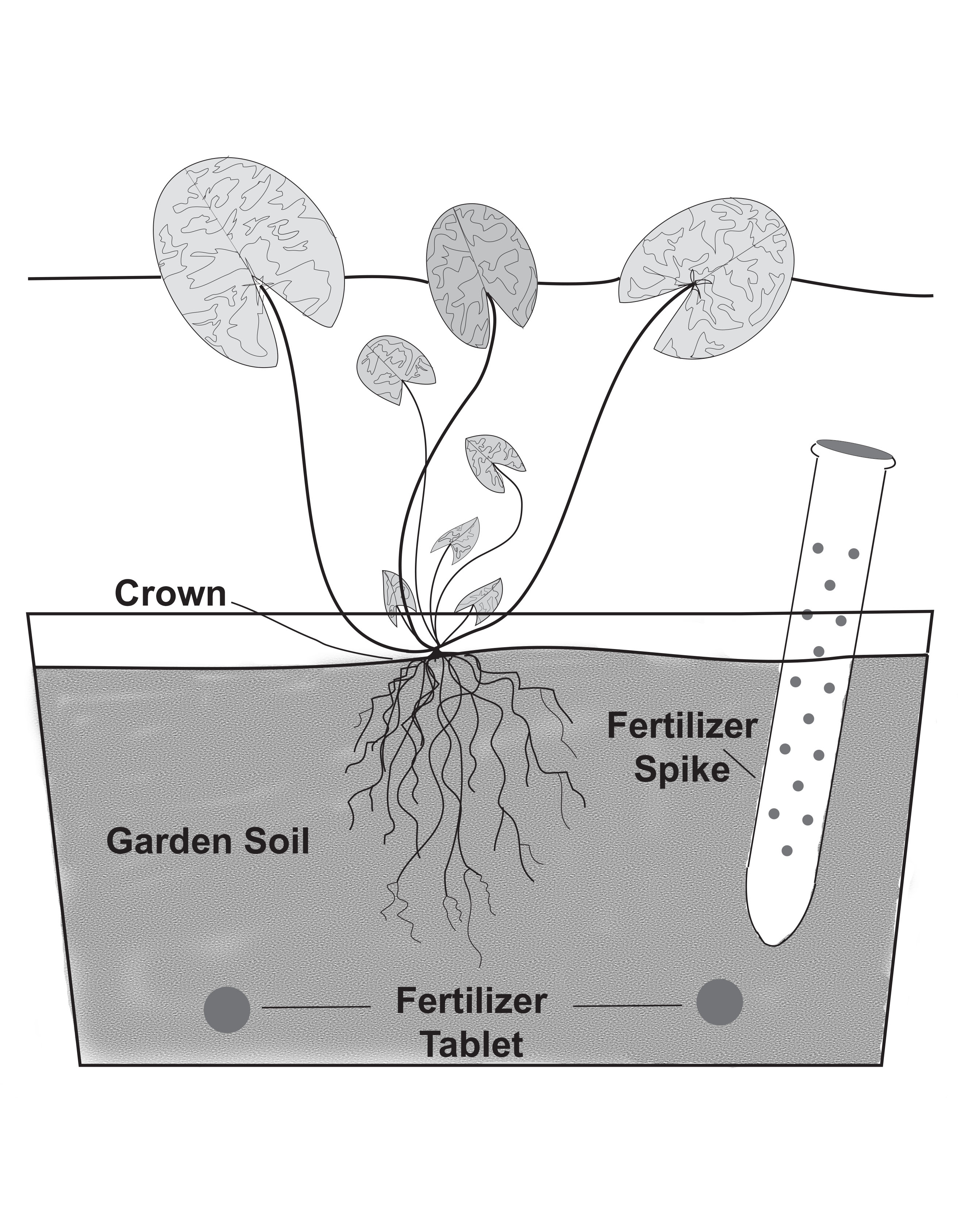
To plant--at the bottom of the pot, make a mound of soil in the middle of the pot, leaving about an inch at the bottom around the mound. Place the fertilizer tablets or capsules around the mound, on top of the 1" soil. Place the waterlily on top of the mound, and let the roots go down over the mound, covering it.. Add soil up to and only slightly covering the crown of the plant; if the plant is too deep, gently pull up on the enitre plant until it is repositioned so the crown is at over very slightly below the soil surface.
Tropical waterlilies should be placed at a water depth of 12" to 24". They may be potted deeper in very hot climates, and should be kept shallow in cooler climates. To help with heat, full sun is recommended; in very hot climates, partial shade is fine, but less blooms may occur in partial shade (viviparous tropical waterlilies are better in partial shade, as they will bloom better than nonviviparous tropicals in lower light conditions). Position the lilies away from waterfalls and fountains, as they prefer still water. Tropical lilies should be fertilized every 3 to 4 weeks throughout the growing season, unless using a slow release fertilizer.
To overwinter tropical waterlilies in cold climates (below Zone 9), restrict fertilizer after July so the plant uses up all the fertilizer in the pot. This will encourage the plant to go dormant once the water turns cold in the Fall, so it will hopefully tuber. After the first couple of hard frosts, remove the pot from the pond and let it drain. The simplest overwintering technique is to looosely wrap the pot in a plastic bag (so it can still breathe a little), and store in a protected garage or other area that is 50 to 60 degrees over the winter. Once the pond warms up in Spring, repot the tuber in fresh soil and refertilize before placing back into the pond. There are several variations on this, usually involving rinsing the tuber clean of dirt and storing. These include puttting the tuber in a quart jar inside the house on a windowsill, or storing at around 60 degrees slightly dry in a ziplock bag (by itself, packed in slightly moist peat moss, or wrapped in moist polyester floss).
To overwinter tropical waterlilies in warmer zones (9 and above), what is simplest and usually works best is to leave them in the pond, perhaps moving them to shallow water for winter. For nonviviparous tropicals, it usually works best to restrict fertilizing after july, to encourage the plant to go dormant in late Fall and tuber; tubering is the most reliable way for them to overwinter. Nonviviparous tropicals, on the other hand, do not always reliably overwinter by tubering, but in wamer climates will usually overwinter in a semi-active state, especially if they are fertilized to encourage them to stay active. Definitely different from cold climates!
Tropical waterlilies are more work to overwinter than hardy waterlilies, and many people choose to simply buy new ones each Spring. They repay this extra effort with many more blooms than hardy waterlilies. In addition, their blooms are generally higher out of the water, they are sniffier (more fragrant!), they come in more extravagent colors and styles (including blues and purples, which are limited and expensive in hardy waterlilies), and they will bloom far later in the Fall than hardy waterlilies--usually through the first couple of frosts.