
Product Overview
Nymphaea 'Wanvisa' Pink-Orange Hardy Water Lily
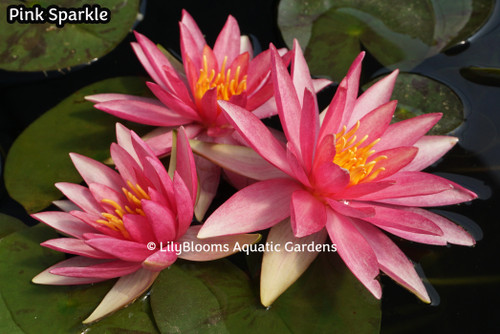
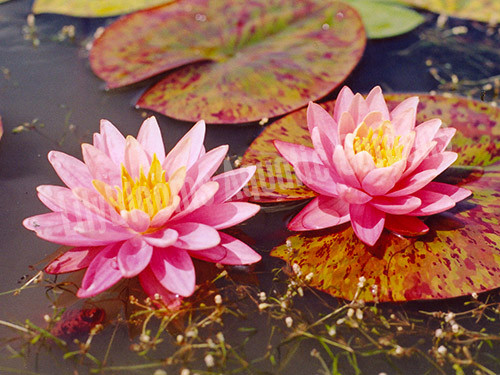
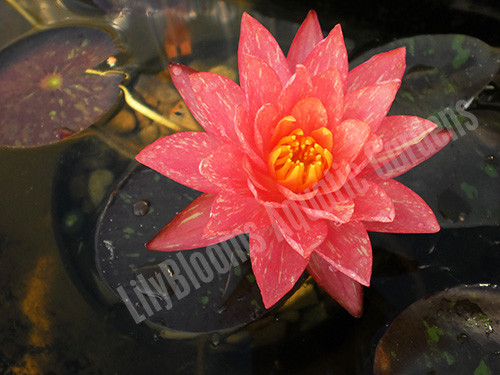
Wanvisa is an award winning hardy water lily. It was voted 2010's best new water lily of the year--even beating out tropical waterlilies in the competition, which has never happened before or since. Wanvisa is a fast grower and great bloomer, showcasing features that have never been seen in a hardy water lily before. The leaves feature splashes of multiple shades of red and green color throughout the pads, and the blooms feature a speckling of creamy light yellow throughout deep orangy flowers. Wanvisa will occasionally have a bloom of solid yellow, or even split part yellow and part orange! Wanvisa is sure to be a pleasing lily for any water garden enthusiast, as it is one of the most unique Hardy Waterlilies available at this time.
If you want to learn more about related cultivars that are in the Wanvisa group and which might best fit your needs, please read our article Ring of Fire, Witch Dorothy, and Other Water Lilies of the Wanvisa Group -- A Review and Comparison. In particular, Witch Dorothy is most similar to Wanvisa, but with a much deeper color saturation for a stunning presentation.
SIZE: Medium to Large, yet with a compact growing habit (5'+ Spread)
PLANTING CONTAINER: We recommend a 12.5" x 7" or 15" x 7" fabric pot. Click on the link to read about why fabric pots work better!
FERTILIZING: For best health and growth, and especially for maximizing the size and number of blooms, we recommend fertilizing waterlilies regularly. Use Pondtabbs 20 count, 60 count, or 300 count for fast release, or Aquascape 6 count or 12 count capsules for slow release (once a year) fertilizing. Aquascape is preferred for low maintenance, but Pondtabbs are useful in Spring when Aquascape is slow to start in low temperatures. Pondtabbs are also useful for a quick extra nutrient push for extra bloom, and for mid-summer fertilizing of a new plant (we don't recommend using slow release fertilizer in mid-summer or later in cold climates, as plants should run out of fertilizer at the end of the year to encourage dormancy in cold climates).
LIGHT REQUIREMENTS: Full sun to partial shade; the more sun, the more bloom
WATER DEPTH: 12" TO 36" (Maximum water depth is for mature water lilies). Shallow water encourages more leave growth and less bloom.
USDA HARDINESS ZONES: 4-11
Water Lilies are shipped bare root and will require planting upon arrival. For in depth planting instructions visit Hardy Waterlily Planting Instructions
For information on using plants for pond filtration, please read our blog on this topic!