Product Overview
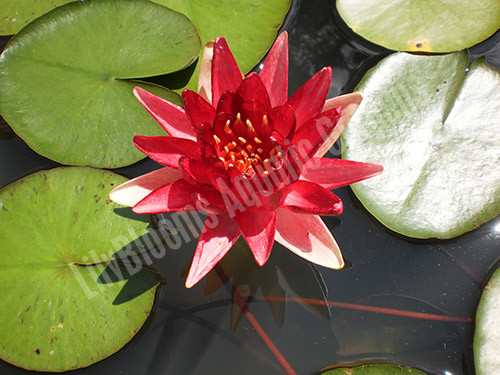
Nymphaea 'Black Princess' Dark Red Hardy Water Lily
Black Princess is the best dark red available, and a truly magnificent lily for any water garden. In the peak of the growing season, the 5" - 6" flower darkens each day until it is a deep red. Parts of the petals will become such a deep red that they will appear black. This is especially striking because the petals have a thick and waxy substance, and the center of the bloom is bright yellow, creating beautiful contrast.
Black Princess was the best of several similar hybrids by Perry Slocum, which is why he chose to patent Black Princess over the others; only a handful of water lilies have ever been patented, and the patent has now expired. Grow in a large container and keep well fertilized for maximum blooming.
SIZE: Large (6'+ Spread)
PLANTING CONTAINER: We recommend a 12.5" x 7" or 15" x 7" fabric pot. Click on the link to read about why fabric pots work better!
FERTILIZING: For best health and growth, and especially for maximizing the size and number of blooms, we recommend fertilizing waterlilies regularly. Use Pondtabbs 20 count, 60 count, or 300 count for fast release, or Aquascape 6 count or 12 count capsules for slow release (once a year) fertilizing. Aquascape is preferred for low maintenance, but Pondtabbs are useful in Spring when Aquascape is slow to start in low temperatures. Pondtabbs are also useful for a quick extra nutrient push for extra bloom, and for mid-summer fertilizing of a new plant (we don't recommend using slow release fertilizer in mid-summer or later in cold climates, as plants should run out of fertilizer at the end of the year to encourage dormancy in cold climates).
LIGHT REQUIREMENTS: Full sun to partial shade; the more sun, the more bloom
WATER DEPTH: 6" TO 36" (Maximum water depth is for mature water lilies)
USDA HARDINESS ZONES: 4-11
Water Lilies are shipped bare root and will require planting upon arrival. For in depth planting instructions visit Hardy Waterlily Planting Instructions
For information on using plants for pond filtration, please read our blog on this topic!